
For many professionals—attorneys, therapists, coaches, and financial specialists—there comes a point when the traditional approach to divorce no longer feels aligned. Litigation-heavy processes can be emotionally draining, adversarial, and often leave families in worse shape than when they started.
At the same time, there is a growing awareness that divorce does not have to be destructive. More families are actively seeking respectful, structured, and cost-effective alternatives.
This shift presents a meaningful opportunity.
Building a divorce mediation or divorce services practice allows professionals to do deeply impactful work—helping individuals navigate one of life’s most difficult transitions with dignity, clarity, and support. But while the mission is compelling, starting from scratch can feel overwhelming.
Where do you begin?
How do you attract clients?
What systems do you need in place?
And how do you build something sustainable—not just idealistic?
This guide walks through the real-world considerations, challenges, and strategies involved in building a successful divorce mediation practice from the ground up.
Why Demand for Divorce Mediation Is Growing
The divorce landscape is changing—and professionals who recognize this early are positioning themselves for long-term success.
1. Clients Are Seeking Lower-Conflict Options
More couples today want to avoid the emotional and financial toll of litigation. They are looking for solutions that prioritize:
- Cooperation over conflict
- Efficiency over prolonged court battles
- Family well-being, especially when children are involved
Divorce mediation and structured divorce services meet these needs directly.
2. Cost Awareness Is Increasing
Litigated divorces can cost tens of thousands of dollars. Many couples simply cannot—or do not want to—commit to that level of expense.
Mediation offers a more accessible alternative, opening the door to a wider range of clients.
3. Professionals Are Shifting Career Paths
Attorneys are moving away from adversarial models. Therapists and coaches are expanding into divorce services. Financial professionals are recognizing the need for guidance during asset division.
This convergence of skill sets is fueling the growth of multidisciplinary divorce services practices.
Challenges New Divorce Professionals Face
Starting a mediation-based practice is meaningful—but it’s not without its challenges.
1. Lack of Business Infrastructure
Many professionals are highly skilled in their field but have limited experience running a business.
Common gaps include:
- Client intake systems
- Pricing structures
- Workflow processes
- Legal and compliance frameworks
Without these, even the most capable professionals struggle to operate efficiently.
2. Difficulty Attracting Clients
One of the biggest early hurdles is visibility.
Questions often include:
- How do clients find me?
- What messaging resonates with people considering divorce?
- How do I differentiate myself in a competitive space?
Marketing a divorce mediation practice requires a nuanced approach—one that balances professionalism with empathy.
3. Emotional Weight of the Work
Supporting clients through divorce requires emotional resilience.
Professionals often underestimate:
- The intensity of client emotions
- The need for boundaries
- The importance of structured processes to prevent burnout
Without the right systems, it’s easy to feel overwhelmed.
4. Uncertainty Around Pricing
Many new professionals struggle to price their services appropriately.
They may:
- Undervalue their work
- Overcomplicate pricing structures
- Feel uncomfortable discussing fees
Clear, transparent pricing is essential—not just for revenue, but for client trust.
Common Mistakes When Starting a Divorce Practice
Understanding what not to do can be just as valuable as knowing what works.
1. Trying to Build Everything Alone
One of the most common mistakes is attempting to create every system, process, and marketing strategy from scratch.
This often leads to:
- Delayed launch timelines
- Inconsistent client experiences
- Burnout before the business even stabilizes
2. Over-Relying on General Business Advice
Generic entrepreneurship advice doesn’t always translate well to divorce services.
Divorce clients are in a unique emotional and legal position. Messaging, intake, and service delivery must reflect that.
3. Focusing Only on Credentials
While qualifications matter, they are not enough to build a thriving practice.
Clients are also looking for:
- Trust
- Clarity
- A structured, guided process
4. Lack of Clear Service Structure
Without a defined process, clients can feel uncertain—and professionals can feel scattered.
A successful mediation practice typically includes:
- Step-by-step client pathways
- Clear timelines
- Defined deliverables
Building a Sustainable Divorce Services Business
Creating a successful practice requires more than passion—it requires structure.
1. Develop a Clear Service Model
Your services should be easy to understand and easy to follow.
Consider:
- What does the client journey look like from start to finish?
- How are sessions structured?
- What outcomes can clients expect?
Clarity builds confidence.
2. Create Repeatable Systems
Systems are what transform a practice from reactive to scalable.
Key areas include:
- Client onboarding
- Document management
- Scheduling and communication
- Case progression tracking
When these systems are in place, you free up mental energy to focus on client care.
3. Build a Thoughtful Marketing Strategy
Marketing a divorce mediation practice is not about aggressive promotion—it’s about connection and education.
Effective strategies include:
- Educational blog content
- SEO-driven website pages
- Social media that builds trust and familiarity
- Referral partnerships with aligned professionals
The goal is to meet clients where they are—often in a moment of uncertainty—and offer clarity.
4. Establish a Strong Professional Identity
What makes your practice different?
Your positioning might focus on:
- A specific client group (e.g., parents, professionals, amicable couples)
- A unique process or framework
- A multidisciplinary approach
Clear positioning helps the right clients find you.
How Collaborative Divorce Models Support Professionals
Many professionals find that joining or aligning with a structured model accelerates their success.
Collaborative and mediation-based frameworks offer:
- Defined workflows
- Proven client processes
- Built-in credibility
- Ongoing support and training
Instead of building everything from scratch, professionals can focus on delivering high-quality service.
The Peaceful Divorce Business Perspective
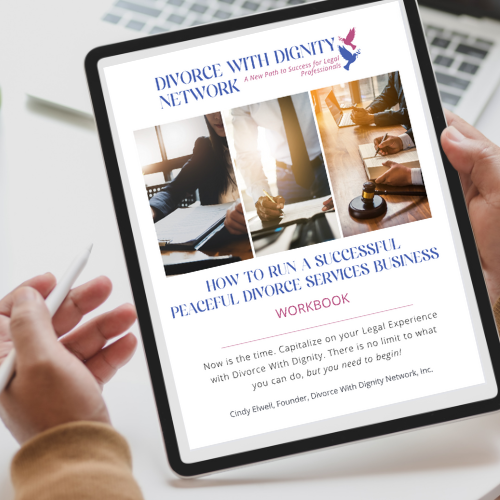
At Peaceful Divorce Business, the goal is to help professionals build meaningful, sustainable careers in divorce services—without having to navigate the complexities alone.
Through the Divorce With Dignity provider model, professionals gain access to:
1. Structured Systems
From client intake to case completion, providers work within a proven framework designed to:
- Simplify operations
- Improve client experience
- Reduce uncertainty
2. Marketing Support
Building visibility is one of the hardest parts of starting a practice.
The model provides:
- Established branding
- SEO-driven web presence
- Guidance on content and outreach
This allows professionals to attract clients more consistently.
3. Professional Community
Working in divorce services can feel isolating—but it doesn’t have to be.
Providers benefit from:
- A network of like-minded professionals
- Ongoing collaboration
- Shared knowledge and support
4. Meaningful Client Work
Perhaps most importantly, the model is centered around helping families navigate divorce with respect and dignity.
Professionals are able to:
- Make a real difference in clients’ lives
- Reduce conflict
- Support healthier long-term outcomes
Closing Thoughts
Building a divorce mediation practice from scratch is both a professional and personal journey.
It requires:
- Clarity of purpose
- Practical systems
- Consistent marketing
- Emotional resilience
But for those who feel called to this work, the rewards are significant.
You’re not just building a business—you’re creating a space where families can move through one of life’s hardest transitions with greater understanding, structure, and care.
And that kind of work matters.
If you’re interested in building a meaningful career helping families navigate divorce respectfully, the Peaceful Divorce Business model offers a structured path to building a successful divorce services practice.
Learn more about becoming a Divorce With Dignity provider:
https://peacefuldivorcebusiness.com
About Peaceful Divorce Business
Peaceful Divorce Business helps professionals build successful divorce mediation and divorce services practices through the Divorce With Dignity provider model. The network supports professionals who want to help families navigate divorce constructively while building sustainable and rewarding careers.
Learn more at:
https://peacefuldivorcebusiness.com